MoneyLock
An anti-scam security feature for SC Mobile, Standard Chartered Singapore
An anti-scam security feature for
SC Mobile, Standard Chartered Singapore

Release Date
2024
Client
STANDARD CHARTERED BANK
STANDARD
CHARTERED BANK
Role
Sole Lead Designer
sole LEad Designer
Product Duration
5 - 6 MONTHS
release date
2024
Client
Photography
role
sole LEad Designer
Product Duration
5 - 6 MONTHS
When a scammer has your password, the bank's last defence is usually reaction speed. MoneyLock changes the equation:
Standard Chartered customers can ring-fence their savings so the money cannot be moved digitally, even by someone holding
their credentials. I designed the experience end to end, from competitive benchmarking through to dev handoff and QA,
and shipped it within the industry timeline set by the Monetary Authority of Singapore (MAS).
When a scammer has your password, the bank's last defence is usually reaction speed. MoneyLock changes the equation: Standard Chartered customers can ring-fence their savings so the money cannot be moved digitally, even by someone holding their credentials. I designed the experience end to end, from competitive benchmarking through to dev handoff and QA, and shipped it within the industry timeline set by the Monetary Authority of Singapore (MAS).
With scams rising sharply in Singapore, Standard Chartered needed a security tool customers could act on themselves. MoneyLock ring-fences funds so they cannot be moved digitally, even with compromised credentials. The challenge was not just technical. We were designing for fear, for trust, and for moments when people feel most vulnerable.
Jul 2024
Jul
2024
Launched on SC Mobile for Singapore clients, within the
industry timeline set by MAS.
Launched on SC Mobile
for Singapore clients,
within the industry
timeline set by MAS.
Launched on SC Mobile for Singapore clients, within the industry timeline set by MAS.
S$15.8 billion
Locked across 7 banks including
Standard Chartered by Oct 2024,
up 76% from launch month.
Locked across 7 banks including Standard Chartered by Oct 2024,
up 76% from launch month
Locked across
7 banks including
Standard Chartered
by Oct 2024, up 76% from launch month
Zero Scams
Reported as of March 2024 for phishing or malware losses on locked funds, industry-wide.
Reported as of March 2024 for phishing
or malware losses
on locked funds, industry-wide.
A security feature that works too
smoothly fails its users. This is the
story of designing friction on purpose.
A security feature that works too smoothly fails its users.
This is the story of designing friction on purpose.
A security feature that works too
smoothly fails its users. This is the story of designing friction on purpose.
A security feature that works too smoothly fails its users. This is
the story of designing friction on purpose.
Disclaimer: To respect confidentiality obligations to Standard Chartered Bank, some details in
this case study have been omitted or generalised. All views expressed here are my own.
To respect confidentiality obligations to Standard Chartered Bank, some details
in this case study have been omitted
or generalised. All views expressed
here are my own.
To respect confidentiality obligations to Standard Chartered Bank,
some details in this case study have been omitted or generalised.
All views expressed here are my own.
01
//Context
MoneyLock
//Context
MoneyLock
01
//Context
MoneyLock
Scams were outpacing the safeguards
Scams were outpacing
the safeguards
Scams were outpacing
the safeguards
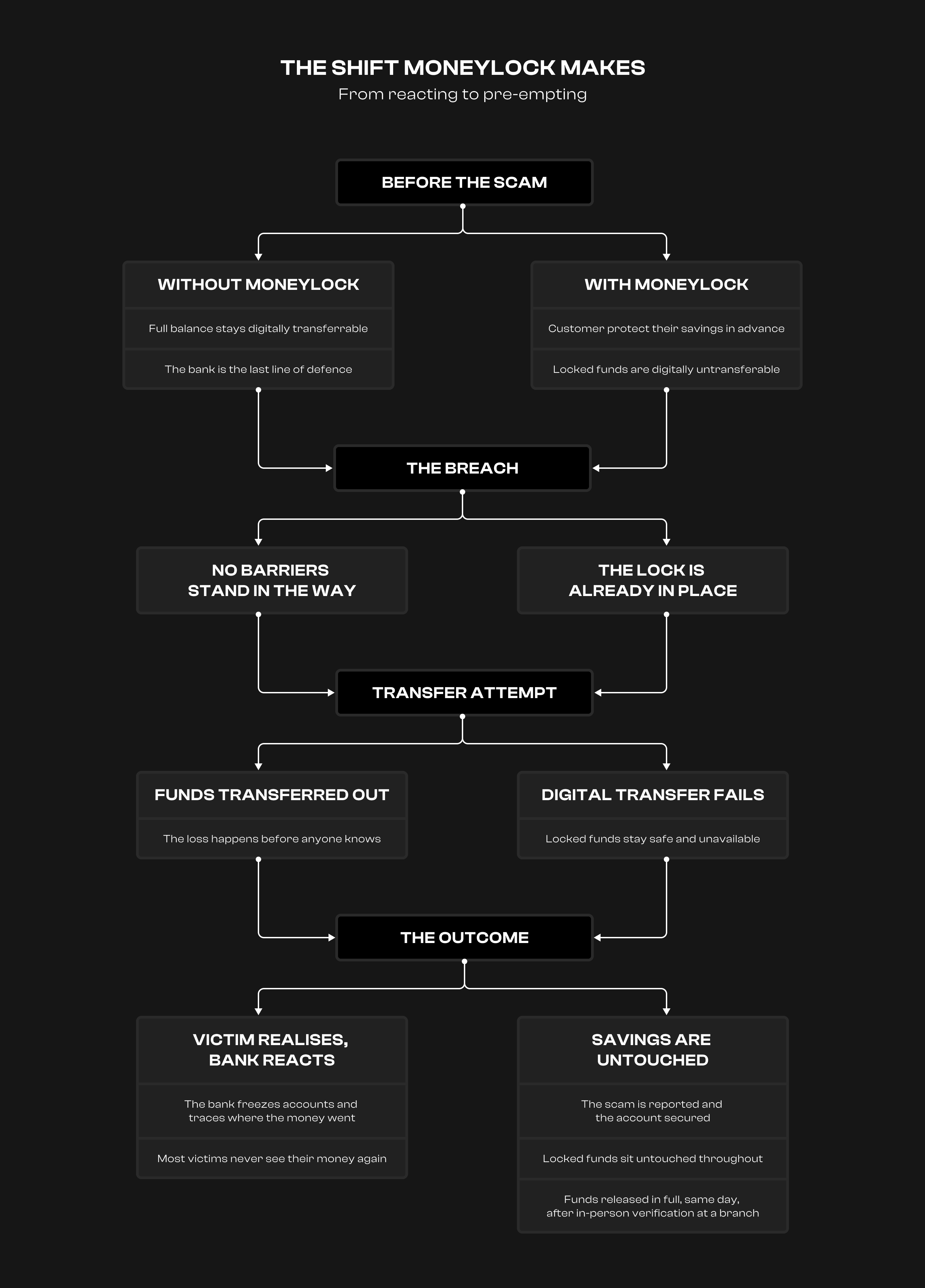
With scams rising sharply in Singapore, Standard Chartered needed a security tool customers could act on themselves. MoneyLock ring-fences funds so they cannot be moved digitally, even with compromised credentials. The challenge was not just technical. We were designing for fear, for trust, and for moments when people feel most vulnerable.
Digital scams in Singapore have been rising at an alarming rate. As banks became the last line of defence for customers, Standard Chartered needed to respond, not just with compliance, but with a genuinely useful security tool that customers could trust and act on themselves.
MoneyLock was conceived as a proactive measure: a feature that allows customers
to ring-fence a portion of their funds, making it digitally untransferable even if their account credentials were compromised. The challenge was not just technical. We were designing for fear, for trust, and for moments when people feel most vulnerable.
02
//The Problem
MoneyLock
//The Problem
MoneyLock
02
//The Problem
MoneyLock
Protection that arrives after the scam is not protection
Protection that
arrives after the
scam is not protection
Protection that arrives after the scam is not protection
Scam victims often lose money not because they were careless, but because by the time they realise something is wrong, it is already too late. Existing security measures were largely reactive: fraud alerts, account freezes, and customer support lines. None of them gave customers a way to protect themselves before an incident occurred.
Scam victims often lose money not because they were careless, but because by the time they realise something is wrong, it is already too late. Existing security measures were largely reactive: fraud alerts, account freezes, and customer support lines. None of them gave customers a way to protect themselves before an incident occurred.
So how do we give customers real
control over their money, without
making security feel like alarm?
So how do we
give customers real control over their money, without making security feel
like alarm?
So how do we give customers real
control over their money, without making security feel like alarm?
There was also a quieter tension underneath. Introducing a security feature inside a banking app risks signalling
danger where customers previously felt safe. The design had to feel empowering, not anxiety-inducing.
There was also a quieter tension underneath. Introducing a security feature inside a banking app risks signalling danger where customers previously felt safe.
The design had to feel empowering,
not anxiety-inducing.
There was also a quieter tension underneath. Introducing a security feature inside
a banking app risks signalling danger where customers previously felt safe.
The design had to feel empowering, not anxiety-inducing.

Instagram-inspired story onboarding walking customers through Money Lock's benefits.
We shipped a simpler version instead: tapping Money Lock in the quick links opens the public webpage in-app.
Instagram-inspired story onboarding walking customers
through Money Lock's benefits. We shipped a simpler version instead: tapping Money Lock in the quick links opens
the public webpage in-app.
03
//Process
MoneyLock
//Process
MoneyLock
03
//Process
MoneyLock
No room for research,
so the market became our research
No room for research, so the market became our research
No room for research, so the market became our research
MoneyLock was not born from internal discovery. It came from an industry initiative led by the Monetary Authority of Singapore (MAS):
after Singapore's local banks launched Money Lock in November 2023, MAS set the expectation that all other major retail banks would
offer the feature by mid-2024. The why was already defined. Our job was to figure out the how, and to do it well.
With no time for primary customer research, we grounded ourselves in what already existed in the market. DBS, OCBC and UOB had
all launched their versions of the feature ahead of us, so I conducted a competitor analysis across all three, examining how each bank introduced the concept to customers, structured the setup flow, handled the locked state, and approached the unlock journey, critically evaluating what worked, what felt unclear, and where there were gaps.
The unlock flow carried the most design risk, so it got the closest scrutiny. From there, I moved into wireframing and flow mapping,
translating those insights into a journey that felt native to the SC Mobile experience.
MoneyLock was not born from internal discovery. It came from an industry initiative led by the Monetary Authority of Singapore (MAS): after Singapore's local banks launched Money Lock in November 2023, MAS set the expectation that all other major retail banks would offer the feature by mid-2024. The why was already defined. Our job was to figure out the how, and to do it well.
With no time for primary customer research, we grounded ourselves in what already existed in the market. DBS, OCBC and UOB had all launched their versions of the feature ahead of us, so I conducted a competitor analysis across all three, examining how each bank introduced the concept to customers, structured the setup flow, handled the locked state, and approached the unlock journey, critically evaluating what worked, what felt unclear, and where there were gaps.
The unlock flow carried the most design risk, so it got the closest scrutiny. From there, I moved into wireframing and flow mapping, translating those insights into a journey that felt native to the SC Mobile experience.
MoneyLock was not born from internal discovery. It came from an industry initiative led by the Monetary Authority of Singapore (MAS): after Singapore's local banks launched Money Lock in November 2023, MAS set the expectation that all other major retail banks would offer the feature by mid-2024. The why was already defined. Our job was to figure out the how, and to do it well.
With no time for primary customer research, we grounded ourselves in what already existed in the market. DBS, OCBC and UOB had all launched their versions of the feature ahead of us, so I conducted a competitor analysis
across all three, examining how each bank introduced the concept to customers, structured the setup flow, handled the locked state, and approached the unlock journey, critically evaluating what worked, what felt unclear, and where there
were gaps.
The unlock flow carried the most design risk, so it got the closest scrutiny.
From there, I moved into wireframing and flow mapping, translating those
insights into a journey that felt native to the SC Mobile experience.
MoneyLock was not born from internal discovery. It came from an industry initiative led by the Monetary Authority of Singapore (MAS): after Singapore's local banks launched Money Lock in November 2023, MAS set the expectation that all other major retail banks would offer the feature by
mid-2024. The why was already defined. Our job was to figure out the how, and
to do it well.
With no time for primary customer research, we grounded ourselves in what already existed in the market. DBS, OCBC and
UOB had all launched their versions of
the feature ahead of us, so I conducted
a competitor analysis across all three, examining how each bank introduced
the concept to customers, structured the
setup flow, handled the locked state, and approached the unlock journey, critically evaluating what worked, what felt unclear, and where there were gaps.
The unlock flow carried the most design risk, so it got the closest scrutiny.
From there, I moved into wireframing
and flow mapping, translating those
insights into a journey that felt native
to the SC Mobile experience.


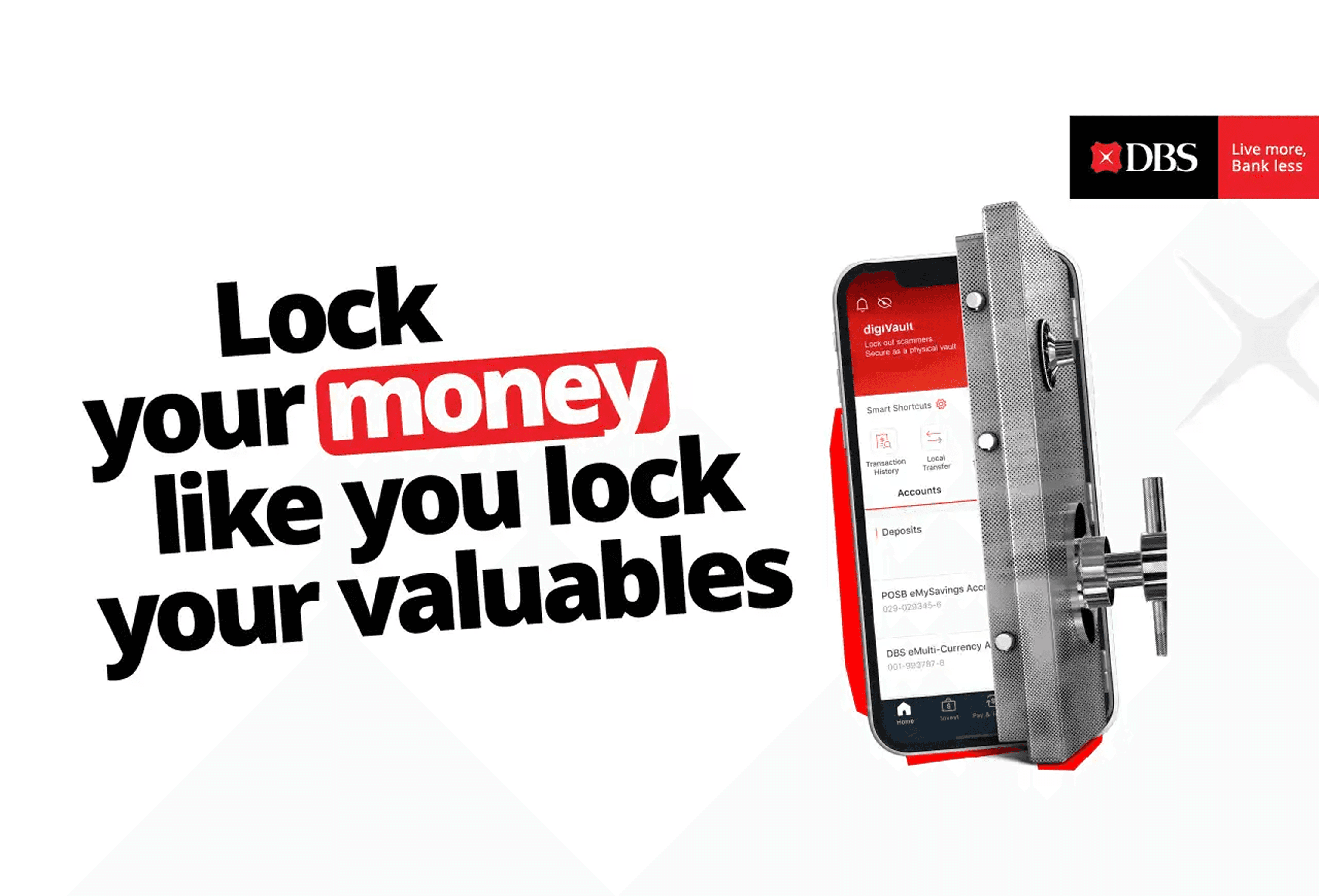


Competitive analysis across three banks that launched MoneyLock ahead of us.
Competitive analysis across three banks that launched MoneyLock ahead of us.
Competitive analysis across three banks
that launched MoneyLock ahead of us.
Competitive analysis across three banks that launched MoneyLock ahead of us.
04
//My Role
MoneyLock
04
//My Role
MoneyLock
Sole designer from start to finish
Sole designer from
start to finish
As the sole designer on MoneyLock, I owned the end-to-end experience, from early discovery through to dev handoff and QA. This meant mapping the full user journey, from how customers discover and learn about the feature, through the lock itself, to managing locked funds
day to day, and translating a fairly complex backend concept into an interface that felt intuitive for everyday banking customers.
I worked closely with product managers, compliance stakeholders, and engineers throughout, presenting design rationale, navigating constraints, and ensuring the final implementation stayed true to the intended experience.
As the sole designer on MoneyLock, I owned the end-to-end experience, from early discovery through to dev handoff and QA. This meant mapping the full user journey, from how customers discover and learn about the feature, through the lock itself, to managing locked funds day to day, and translating a fairly complex backend concept into an interface that felt intuitive for everyday banking customers.
I worked closely with product managers, compliance stakeholders, and engineers throughout, presenting design rationale, navigating constraints, and ensuring the final implementation stayed true to the intended experience.
As the sole designer on MoneyLock, I owned the end-to-end experience, from early discovery through to dev handoff and QA. This meant mapping the full
user journey, from how customers discover and learn about the feature, through the lock itself, to managing locked funds day to day, and translating a fairly complex backend concept into an interface that felt intuitive for everyday
banking customers.
I worked closely with product managers, compliance stakeholders, and engineers throughout, presenting design rationale, navigating constraints, and ensuring the final implementation stayed true to the intended experience.
//My Role
MoneyLock
Sole designer from start to finish
As the sole designer on MoneyLock,
I owned the end-to-end experience,
from early discovery through to dev handoff
and QA. This meant mapping the full user journey, from how customers discover and learn about the feature, through the lock itself, to managing locked funds day to day, and translating a fairly complex backend concept into an interface that felt intuitive for everyday banking customers.
I worked closely with product managers, compliance stakeholders, and engineers throughout, presenting design rationale, navigating constraints, and ensuring the final implementation stayed true to the intended experience.

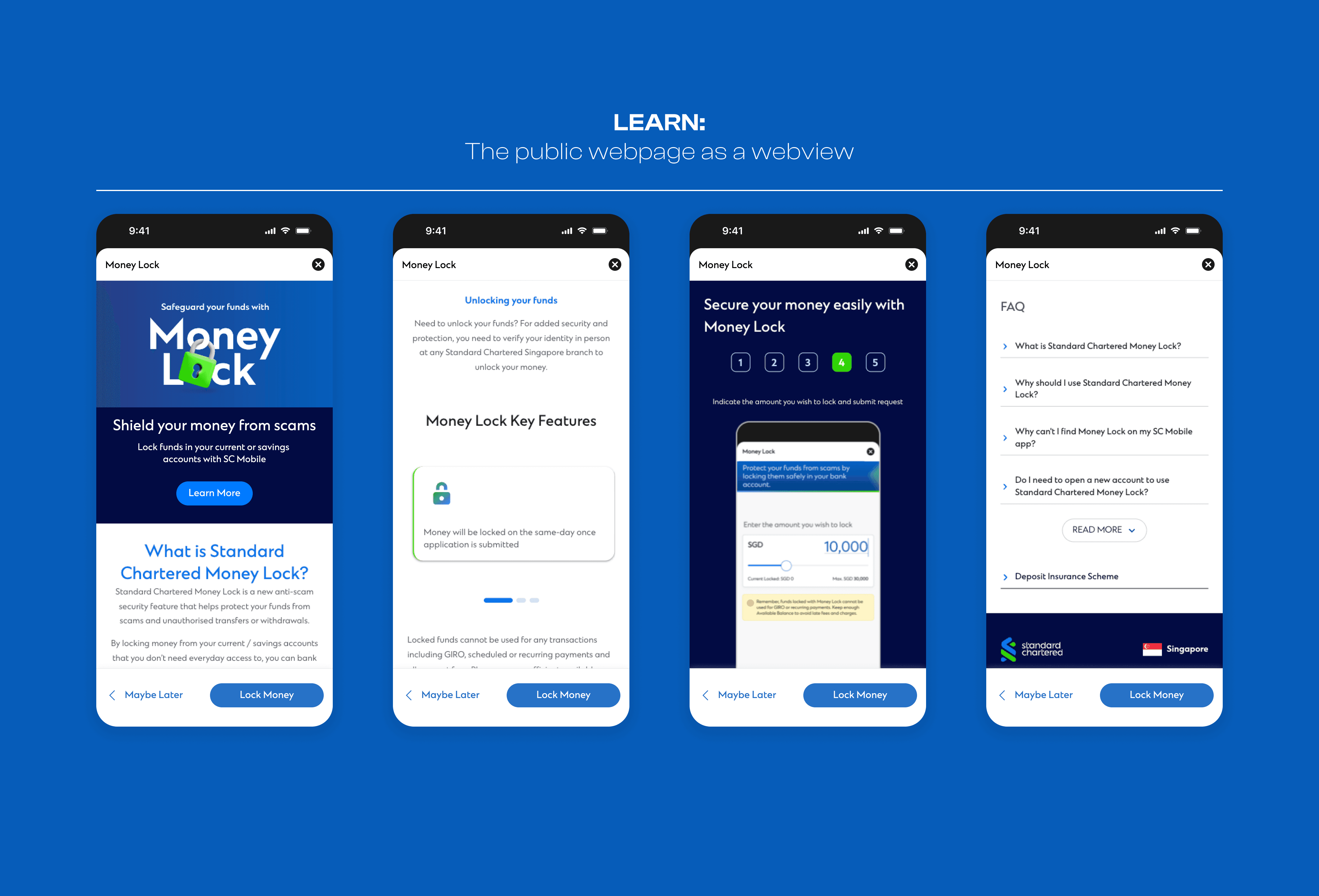


The end-to-end MoneyLock journey on SC Mobile, from discovery to everyday use, shown for a savings account.
The end-to-end MoneyLock journey on SC Mobile, from discovery to everyday use, shown for a savings account.
The end-to-end MoneyLock journey on SC Mobile, from discovery to everyday use, shown for a savings account.
The end-to-end MoneyLock journey on SC Mobile, from discovery to everyday use, shown for a savings account.
05
//The Design
MoneyLock
//The Design
MoneyLock
05
//The Design
MoneyLock
Three key moments to get it right
Three key moments
to get it right

Setup:
Lean Journey
Tap Money Lock and the bank's public webpage opens in-app. Education lives in one place,
written once. The native flow stays lean: pick an account, set the amount, submit. A few taps,
nothing to relearn.
Tap Money Lock and the bank's public webpage opens in-app. Education lives in one place, written once.
The native flow stays lean: pick an account, set the amount, submit. A few taps, nothing to relearn.

Locked State:
Quiet Confidence
A persistent indicator shows
funds are ring-fenced without dominating the everyday view. Locked money stays visible, earns interest, and accepts deposits.
The goal was quiet confidence,
not constant alarm.
A persistent indicator shows funds are ring-fenced without dominating the everyday view. Locked money stays visible,
earns interest, and accepts deposits. The goal was quiet confidence, not constant alarm.
A persistent indicator shows funds are ring-fenced without dominating the everyday view. Locked money stays visible, earns interest, and accepts deposits.
The goal was quiet confidence, not constant alarm.

Unlock:
Purposeful Friction
Unlock:
Purposeful Friction
Unlocking needs an in-person branch visit, the strongest friction
of the three. That pause is the point: scam victims are pushed
to act fast, and a deliberate
barrier buys time to think.
The visuals stay calm.
Unlocking needs an in-person branch visit, the strongest friction of the three. That pause is the point: scam victims
are pushed to act fast, and a deliberate barrier buys time to think. The visuals stay calm.
Unlocking needs an in-person branch visit, the strongest friction of the three. That pause is the point: scam victims are pushed to act fast, and a deliberate barrier
buys time to think. The visuals stay calm.
Setup:
Lean Journey
Tap Money Lock and the bank's public webpage opens in-app. Education lives in one place, written once. The native flow stays lean: pick an account, set the amount, submit. A few taps, nothing to relearn.
Locked State:
Quiet Confidence
A persistent indicator shows
funds are ring-fenced without dominating the everyday view. Locked money stays visible,
earns interest, and accepts deposits. The goal was quiet confidence, not constant alarm.
Unlock:
Purposeful Friction
Unlocking needs an in-person branch visit, the strongest friction of the three. That pause is the point: scam victims are pushed
to act fast, and a deliberate
barrier buys time to think.
The visuals stay calm.

06
//Outcome
MoneyLock
//Outcome
MoneyLock
06
//Outcome
MoneyLock
The quiet success of money that didn't move
The quiet success of money that didn't move
The quiet success of money that didn't move
MoneyLock launched in July 2024 for Singapore clients on the SC Mobile app, within the industry timeline set by MAS. It gave customers a tangible, proactive way to protect their savings, something that had not existed before in the product. The concept had already proven itself: by March 2024, MAS reported that customers at DBS, OCBC and UOB had locked more than S$6.6 billion across more than 78,000 Money Lock accounts, with no reported phishing or malware scam losses involving locked funds.
The market kept validating the idea after we shipped. By end October 2024, MAS reported that more than 181,000 customers across seven banks, Standard Chartered included, had locked close to S$15.8 billion, a 76 percent jump from July. The bank does not publish feature-level adoption figures, but being part of that industry-wide shift is exactly what the project set out to achieve.
For me, this project was a reminder of how much the emotional register of a design matters. The feature itself was relatively straightforward in concept, but every word, interaction, and visual choice carried weight, because we were designing for a moment of real vulnerability.
If I were to revisit it, I'd want to explore how MoneyLock could be surfaced more proactively, perhaps as a contextual prompt during onboarding or after a customer's first large deposit, rather than something they have to discover independently. Adoption is only meaningful if the people who need it most actually find it.
MoneyLock launched in July 2024 for Singapore clients on the SC Mobile app, within the industry timeline set by MAS.
It gave customers a tangible, proactive way to protect their savings, something that had not existed before in the product. The concept had already proven itself: by March 2024, MAS reported that customers at DBS, OCBC and UOB had locked more than S$6.6 billion across more than 78,000 Money Lock accounts, with no reported phishing or malware scam losses involving locked funds.
The market kept validating the idea after we shipped. By end October 2024, MAS reported that more than 181,000 customers across seven banks, Standard Chartered included, had locked close to S$15.8 billion, a 76 percent jump from July. The bank does not publish feature-level adoption figures, but being part of that industry-wide shift is exactly what the project set out to achieve.
For me, this project was a reminder of how much the emotional register of a design matters. The feature itself was relatively straightforward in concept, but every word, interaction, and visual choice carried weight, because we were designing for a moment of real vulnerability.
If I were to revisit it, I'd want to explore how MoneyLock could be surfaced more proactively, perhaps as a contextual prompt during onboarding or after a customer's first large deposit, rather than something they have to discover independently. Adoption is only meaningful if the people who need it most actually find it.


CNA news coverage on Money Lock adoption across seven banks in Singapore. Source: Channel NewsAsia
CNA news coverage on Money Lock adoption
across seven banks in Singapore.
More Works More Works

Let'S WORK
TOGETHER

OPEN TO SENIOR EXPERIENCE DESIGNER ROLES AND
FREELANCE UI/UX AND LOGO DESIGN PROJECTS.
Let'S WORK
TOGETHER
OPEN TO SENIOR EXPERIENCE DESIGNER ROLES AND
FREELANCE UI/UX AND LOGO DESIGN PROJECTS.
Let'S WORK
TOGETHER
OPEN TO SENIOR EXPERIENCE DESIGNER
ROLES AND FREELANCE UI/UX AND LOGO
DESIGN PROJECTS.
Let'S WORK
TOGETHER
OPEN TO SENIOR EXPERIENCE DESIGNER
ROLES AND FREELANCE UI/UX AND
LOGO DESIGN PROJECTS.
Phone